A month ago, the CIM published its 2025 annual report, in which the institute confirmed the announced turning point for audience measurement in our country. Central to this transformation is CIM ONE, the underlying vision that is gradually entering a decisive and concrete phase.
Explanation by Michael Debels, research director of the CIM.
For those not familiar with the topic, can you briefly remind us of the objective of CIM ONE?
The objective is to have a sustainable measurement framework, in a context characterized by fragmented media use and more complex media journeys. We are evolving from separate “media centric” studies to an integrated “consumer centric” approach.
This approach is based on a hybrid system that combines a cross-media panel with large datasets (big data) from census measurements (logs, tags, etc.), and could in the long term be enriched with data from telecom operators and platforms. The aim is to produce uniform indicators — Total Video, Total Audio, Total Digital — that reflect actual media consumption, regardless of the screen.
Within this framework, priorities have been defined in a specific order. After the design and implementation phase, including the panel, we started the operational phase a few months ago. We are currently working on modelling and producing the first results, specifically for video and audio.
One of the pillars of CIM ONE is the XMP panel, which was initially limited to the north of the country. How is the composition of the southern version progressing?
The Dutch-speaking XMP panel is already operational and generates weekly data. We are currently finalizing the construction of its French-speaking counterpart, with the objective of having 1,500 panel members by 30 September.
In parallel, we are working on modelling, including the integration of data from the TAM router, which measures all platforms. A major challenge is better identification of “Other Screen Usage” (OSU), which today represents around 30 to 35% of usage and is still not sufficiently qualified.
On top of that comes the integration of out-of-home data and video consumption on other screens. The aim is to fully cover all forms of consumption, regardless of viewing context.
If the schedule is respected, the market will be able to use these results from 1 January 2027.
Will historical comparisons be affected by this new approach?
Not really. It depends on the level of analysis. The TAM first screen or Total TV remain identical in terms of output, and the TAM study (Total Audience Measurement) remains the “source of truth”. However, it will be possible to enrich analyses through a new infrastructure with additional dimensions related to the virtual population, such as OSU.
What are the implications for radio, or rather audio?
The transition from radio to audio is indeed the first major structural change. Data collection will henceforth be carried out via passive measurement in the XMP panel, which will also include streaming services.
In addition, a listening diary study will remain in place, particularly for calibration and benchmarking. This makes it possible to reconstruct comparable figures with the CIM RAM study (e.g. quarters, average weeks), ensuring continuity.
Broadcasters will also benefit from more detailed data, such as minute-by-minute figures or dated data, which can help with programming.
As a precaution, the current radio study will be extended for one more wave. The intention is to publish the new audio currency between February and June next year, with Total Audio ideally available in April 2027.
Two types of outputs will coexist: on the one hand passive measurement data for broadcasters, and on the other hand calibrated results published quarterly for the entire market.
What about the BPS study?
The Belgian Publishing Survey will continue in its current form, with a questionnaire and fieldwork. The main change lies in the order of operations. Today, results are already combined with the Genius internet study. In the future, this will be reversed, with a “consumer digital first” approach.
The starting point will be the XMP panel, which will measure not only websites and apps, but also podcasts and video. A final “classic” BPS publication is planned for October 2026. The integration of publishing into CIM ONE is expected in the second quarter of 2027.
There will also be a new cinema study. How will this be integrated into CIM ONE?
The CIM is indeed launching an initial separate cinema study, independent of the publishing survey. The project is still in its early stages: the two proposals following the tender are currently being evaluated. In the long term, the results will be integrated into CIM ONE via data linkages, including through questions in the XMP panel.
For out-of-home (OOH), we are in a similar phase. The design and timing of this study will determine how it is integrated into CIM ONE.
Is the hardest part behind us?
The biggest challenge remains ensuring the overall coherence of the system. The goal is to achieve a single unified data production system, despite the specific trajectories per medium. In doing so, it is crucial to maintain the reliability and richness of the data at each stage of modelling, without information loss. This requires a robust architecture, strict quality controls, and backup mechanisms in case certain data sources fail.
The work with GfK focuses precisely on determining the order of operations, reference sources, and fallback solutions. Together with their data scientists, a coherent data processing chain is being developed. The final result will be a virtual population in which all models come together; this is currently still in development. Finally, there is also the challenge of exploitation, with the development of new CIM ONE software — a project in itself.
Text interview MM.
Recent news

Media measurement 2.0: 11 takeaways about what technology makes possible today
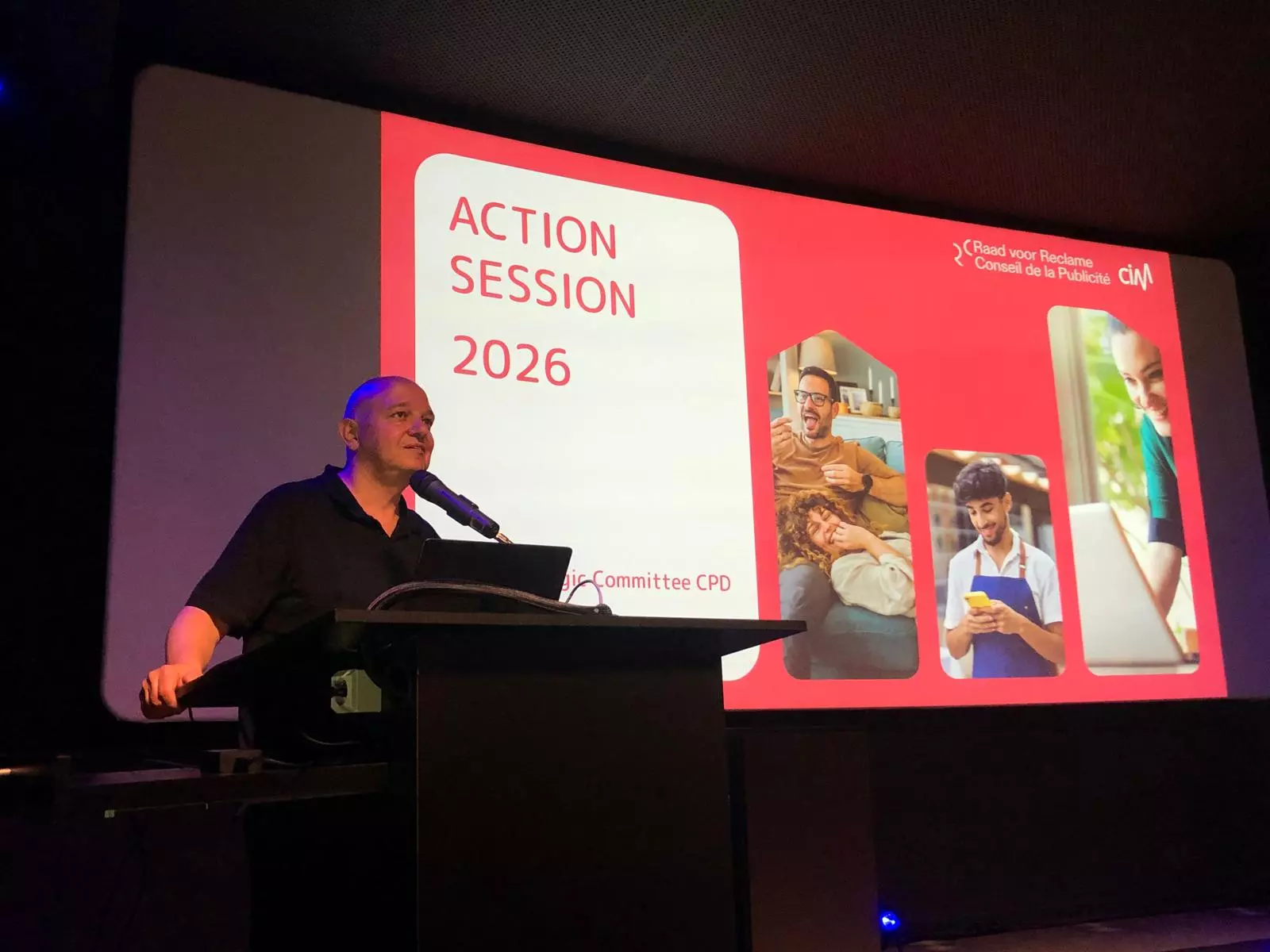
Once again, the second edition of the CIM Action Session has brought a number of notable…

CIM ONE: “Belgium is once again becoming a global player in media measurement” - Luc Suykens (interview UBA)
Belgium is back on the global map of media measurement. With CIM One, the tripartite body…
Recent news
CIM ONE: “Belgium is once again becoming a global player in media measurement” - Luc Suykens (interview UBA)
Belgium is back on the global map of media measurement. With CIM One, the tripartite body comprising advertisers, media, and media agencies is…

CIM ONE: Transition to consumer-centric measurement – article The Media Leader 08/05/2026